How to Launch a Mobile MVP Under $2,000: The Lean Founder's Guide
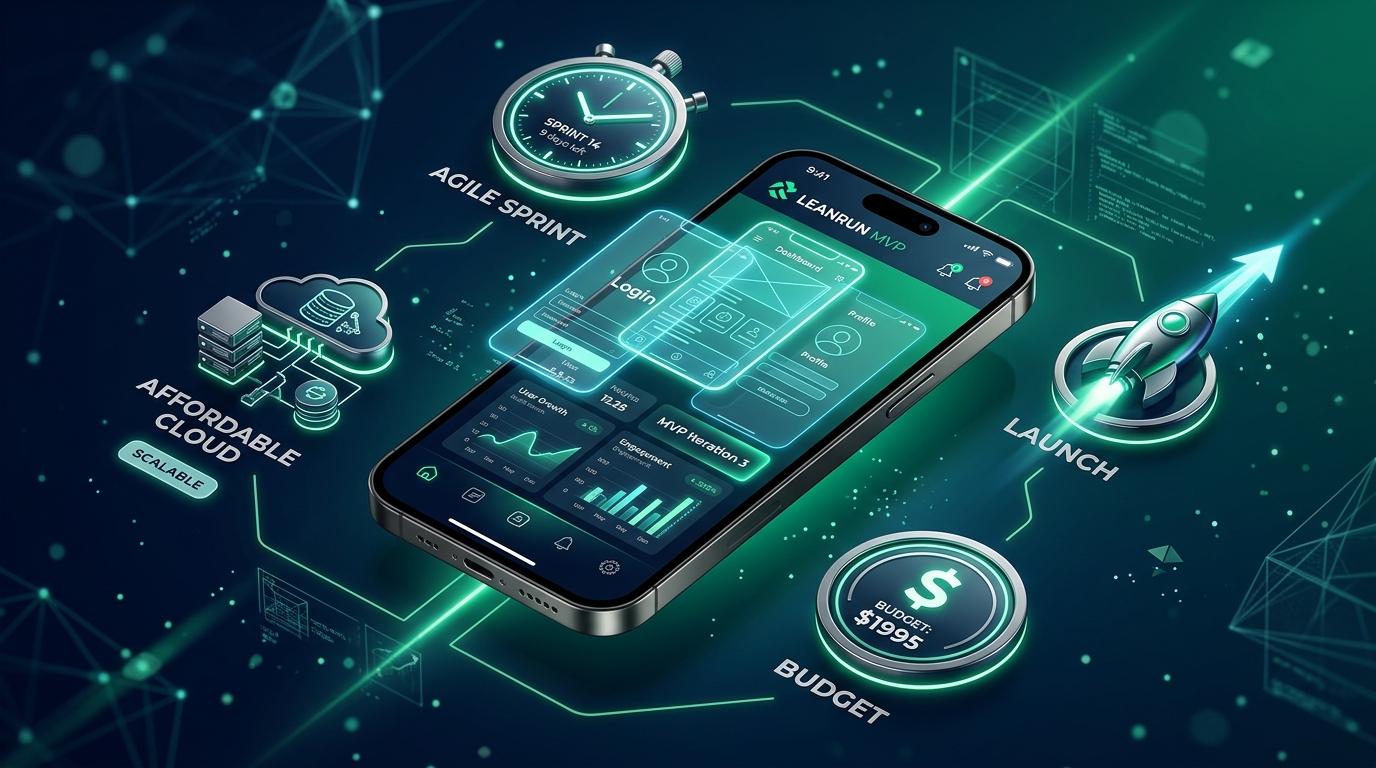
The $30,000 MVP Myth: Why Early-Stage Apps Overspend
A widespread misconception among startup founders is that building a Minimum Viable Product (MVP) for iOS and Android requires $30,000 to $80,000 and six months of development time. Traditional agencies frequently quote massive budgets because they approach an unproven MVP with the architecture of a mature enterprise app.
The hard reality of early-stage startups is that your first version exists solely to validate user demand and test product-market fit. Building 20 features before verifying that users care about the first one is the number one cause of startup capital depletion.
In 2026, advances in cross-platform frameworks, Backend-as-a-Service (BaaS) engines, and modular UI component libraries make it entirely possible to launch a production-ready, beautiful mobile app for under $2,000 USD. Here is the exact lean engineering roadmap we use at WebArk.
Step 1: Ruthless Scope Pruning (The "One Core Problem" Rule)
To launch within a $2,000 budget, you must distinguish between the essential value proposition and nice-to-have cosmetic fluff:
| Feature Category | Cut from $2k MVP (Defer to Phase 2) | Keep in $2k MVP (Phase 1 Essential) |
|---|---|---|
| Authentication | Complex OAuth with 5 social providers, 2FA SMS tokens | Email magic link or simple password / OTP login |
| Payments & Billing | Complex multi-tier subscription engines & automated invoicing | Single Stripe Checkout session or fixed product purchase |
| Messaging / Chat | Bespoke WebSockets chat with typing indicators and voice notes | Direct WhatsApp click-to-chat integration or email notifications |
| Admin Dashboard | Custom web admin portal with 50 granular role permissions | Built-in Supabase / Firebase Table Studio for direct data management |
Step 2: Unified Cross-Platform Architecture (React Native & Expo)
Building separate native codebases in Swift for iOS and Kotlin for Android immediately doubles your engineering labor and App Store compliance overhead.
By leveraging React Native with Expo Application Services (EAS), our engineers write a single TypeScript codebase that compiles directly to native iOS and Android binaries. Expo provides 99% native performance, smooth 60fps animations, hardware camera and GPS access, and Over-the-Air (OTA) updates so bug fixes can be published instantly without waiting 48 hours for App Store approval.
Step 3: Zero-DevOps Backend (Supabase or Firebase BaaS)
In traditional software development, building backend REST APIs, authentication tables, password reset flows, and database hosting easily consumes $4,000+ of engineering time.
For a lean MVP, we pair React Native with Supabase (an open-source PostgreSQL BaaS):
- Instant Authentication: Built-in JWT auth, email verification, and session management out of the box.
- Row-Level Security (RLS): High-grade database security policies configured directly in PostgreSQL.
- Auto-Generated REST & Real-time APIs: Instant querying with TypeScript type safety, eliminating weeks of repetitive backend boilerplate.
- Free Tier Generosity: The generous Supabase free tier easily supports your first 10,000 active users with $0 monthly cloud hosting costs.
Step 4: The 3-Week Lean Sprint Schedule
- Week 1 (Architecture & UI Shell): Define data schema in Supabase, setup React Native/Expo repository, configure theme design tokens, and build auth flows.
- Week 2 (Core Feature Workflow): Implement the primary user action (e.g., booking a service, listing an item, or viewing personalized content) and connect state management.
- Week 3 (Polish, QA & Store Deployment): Conduct end-to-end device testing on iPhone and Android, configure app icons, splash screens, privacy policies, and submit to Apple TestFlight and Google Play Internal Testing.
Itemized Budget Breakdown for a Sub-$2,000 Launch
| Line Item | Cost (USD) | Notes |
|---|---|---|
| Sprint Engineering (WebArk Lean Pod) | $1,499 – $1,800 | Full source code in React Native, Supabase integration, 100% IP ownership |
| Apple Developer Program | $99 / year | Paid directly to Apple for App Store distribution rights |
| Google Play Developer Console | $25 (One-time) | Paid directly to Google for life-time publishing account |
| Cloud Backend & Database (Supabase) | $0 / month | Free tier accommodates up to 500MB DB & 50,000 monthly active users |
| Domain & App Landing Page | $15 – $25 | Custom domain for app landing page and universal links |
| Total Capital Investment | $1,638 – $1,949 USD | Complete cross-platform iOS & Android launch |
"The goal of an MVP is not to impress venture capitalists with 50 unused features; it is to prove user retention on the single problem you solve. Spending more than $2k before validating retention is burning runway."
What to Do After Launch: The Validation Loop
Once your MVP is live on Apple TestFlight and Google Play, focus 100% of your energy on acquiring your first 50 engaged users. Track user session length, drop-off rates, and qualitative feedback via direct WhatsApp dialogues.
When you have proven retention, you can return to WebArk to execute Phase 2 features (push notifications, complex billing, automated workflows) backed by actual paying customers or angel investor funds.
Ready to validate your startup concept? Check our transparent Startup & Mobile MVP Pricing, explore our MVP Development Services, or speak directly with our engineering architects today.
WebArk Engineering Architecture Team
Technical EditorialWritten by senior cloud architects and mobile engineering leads at WebArk. With 10+ years delivering mission-critical applications across the UK, USA, France, Germany, and Norway, our team focuses on high-performance Next.js, React Native, and cost-effective digital engineering.
Recommended Services Related to This Topic
Mobile App Development (iOS & Android)
Turnkey cross-platform React Native & Flutter apps with offline sync and cloud APIs.
European & Nordic Mobile Development
Native-feel applications with Vipps, multi-currency, and GDPR privacy compliance.
Transparent App Pricing Packages
Fixed-price mobile app development starting from $1,499 USD with 100% source code ownership.
Related Guides & Insights
Deepen your technical knowledge with expert engineering articles.

How Non-Technical Founders Can Build Software Without Getting Trapped: 5 Rules for IP, Code & Delivery
A practical guide for non-technical startup founders and business owners. Learn how to hire developers, protect your source code, avoid vendor lock-in, and guarantee delivery without getting taken advantage of.
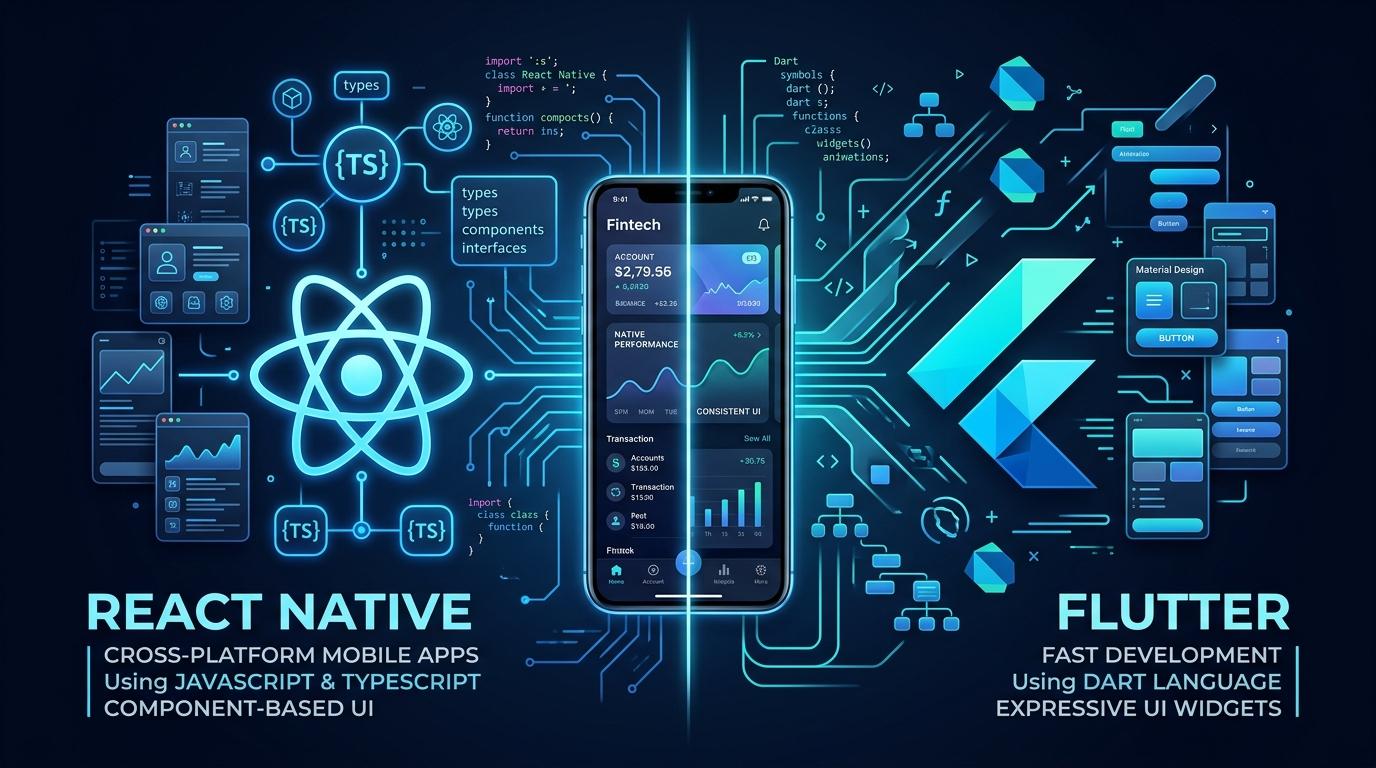
React Native vs Flutter in 2026: An Honest Engineering Guide for Founders
Choosing between React Native and Flutter for your new mobile app? Discover an objective, unbiased comparison of performance, hiring costs, code sharing, and long-term ecosystem viability in 2026.
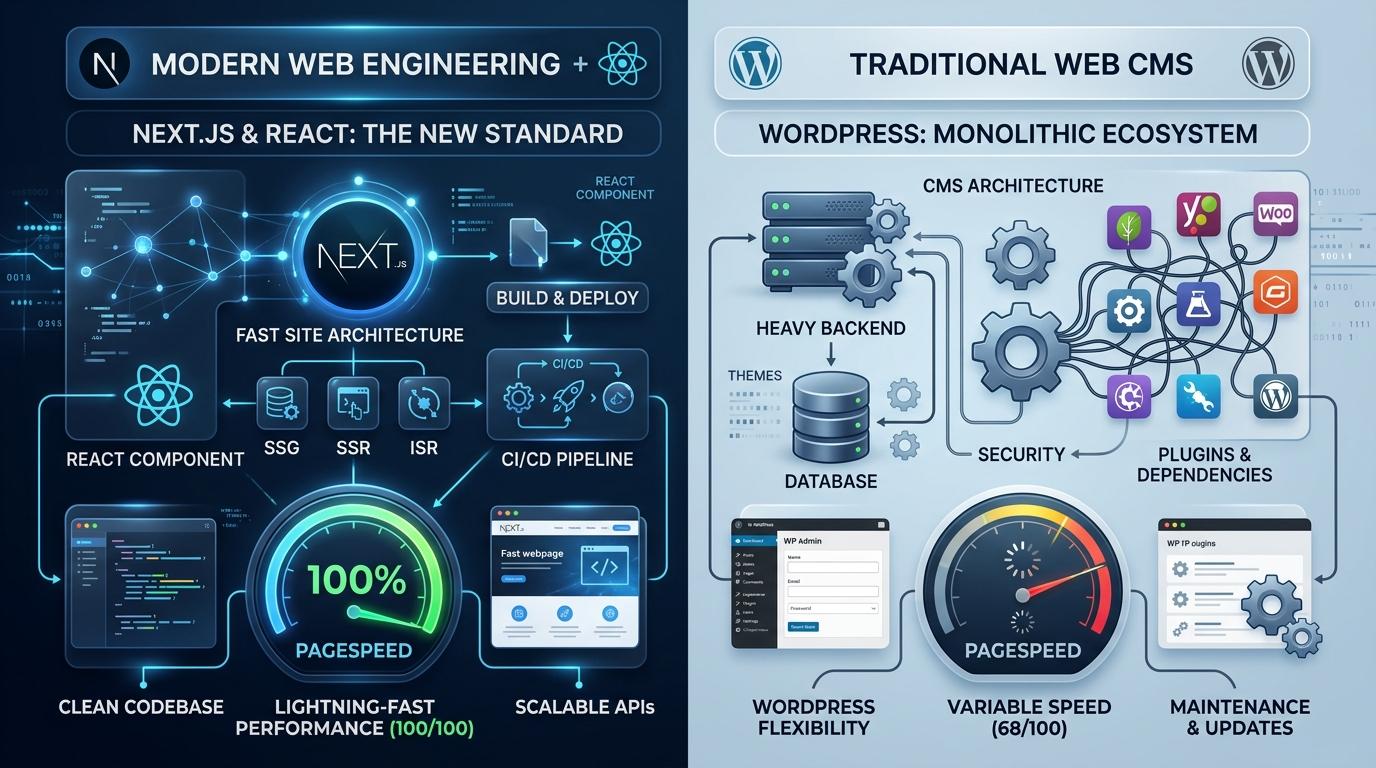
Next.js vs WordPress Cost for SMEs: The Real 3-Year TCO Breakdown (2026)
Thinking of building an SME website? Compare the true 3-year Total Cost of Ownership (TCO) between modern Next.js and traditional WordPress—from initial development to hosting, plugin bloat, security, and conversion impact.
