How Non-Technical Founders Can Build Software Without Getting Trapped: 5 Rules for IP, Code & Delivery

The Non-Technical Founder's Dilemma: Big Vision, Opaque Execution
Building a technology product without a technical background is one of the most exciting—and terrifying—journeys in business. You have a deep understanding of your industry, real customer pain points, and a viable commercial model. But when it comes to turning that vision into working software, you are forced to rely on external developers or agencies.
Unfortunately, the software industry is full of cautionary tales: founders spending $40,000 only to receive half-finished buggy code, agencies holding repositories hostage for unexpected "extra fees", or developers disappearing midway through development.
You do not need a computer science degree to successfully direct a software build. You simply need to enforce 5 non-negotiable operational rules that protect your capital, your intellectual property, and your launch timeline.
Rule 1: Demand 100% Repository Access in YOUR GitHub From Day One
The single most dangerous mistake non-technical founders make is allowing developers to host the source code exclusively on their personal private GitHub accounts or private agency servers.
If a dispute arises, the agency can lock you out, and you lose 100% of your investment. From Sprint 1:
- Create your own free GitHub or GitLab organization account under your business name.
- Have the engineering team initialize the repository inside your account and add developers as contributors.
- Verify that new commits and pull requests are pushed at least once every 48 hours.
Rule 2: Execute an Air-Tight Mutual NDA and Explicit "Work-for-Hire" IP Assignment
Under international copyright law, the person who writes the code owns the copyright by default—unless an explicit legal contract transfers that ownership to you.
Before any scoping discussions or wireframe reviews take place, ensure both parties execute a bilateral agreement with an unambiguous clause stating: "All code, designs, database schemas, and documentation created during this engagement constitute work-for-hire and become the 100% exclusive Intellectual Property (IP) of the Client upon invoice payment."
Rule 3: Insist on Weekly Working Demos on Live Staging Environments
Never accept a "black box" development contract where an agency promises: "Pay us now, and we'll deliver the finished product in 3 months."
Professional engineering teams follow agile sprints with continuous deployment (CI/CD). Every single Friday, you should be able to open a private staging link (e.g. staging.yourproduct.com or Apple TestFlight on your iPhone) and click through the exact features built that week. If a team refuses to provide a live staging environment, walk away immediately.
Rule 4: Eliminate Vendor Lock-In (Standard Open-Source Stacks)
Be extremely wary of agencies that attempt to build your product on proprietary in-house CMS platforms, obscure frameworks, or closed-source website builders. If that agency goes out of business or hikes their hourly rates by 300%, you are trapped.
Always mandate standard, universally recognized open-source technologies:
- Frontend: Next.js, React, React Native, or Flutter.
- Backend & Database: Node.js / TypeScript, PostgreSQL, Prisma ORM, Supabase, or Redis.
- Infrastructure: Docker, AWS, or Vercel edge deployment.
A clean TypeScript codebase written with modern ESLint standards can be audited, extended, or maintained by any senior engineer in the world.
Rule 5: Use Milestone-Based Delivery Tied to Acceptance Criteria
Avoid open-ended hourly billing arrangements (Time & Materials) where you receive ambiguous invoices for "80 hours of backend troubleshooting" with zero verifiable deliverables.
Instead, insist on milestone-based fixed pricing. Divide the build into 3 or 4 clear phases (e.g., 50% upon project kickoff, 25% upon staging milestone acceptance, and 25% upon final App Store release and repository handover). You only release payments when the software passes your functional testing.
"Our non-technical clients love working with WebArk because we eliminate technical jargon. We treat founders as product owners, giving them full visibility into Git commits, staging releases, and transparent milestone budgets."
Partner With an Engineering Studio That Puts You First
At WebArk, we specialize in helping early founders turn concepts into market-tested software products with zero lock-in and complete IP protection.
Explore our transparent packages on the WebArk Pricing Page, learn more about our Custom Software Development Services, or schedule a free architectural discovery call with our senior team today.

WebArk Engineering Architecture Team
Technical EditorialWritten by senior cloud architects and mobile engineering leads at WebArk. With 10+ years delivering mission-critical applications across the UK, USA, France, Germany, and Norway, our team focuses on high-performance Next.js, React Native, and cost-effective digital engineering.
Recommended Services Related to This Topic
Mobile App Development (iOS & Android)
Turnkey cross-platform React Native & Flutter apps with offline sync and cloud APIs.
European & Nordic Mobile Development
Native-feel applications with Vipps, multi-currency, and GDPR privacy compliance.
Transparent App Pricing Packages
Fixed-price mobile app development starting from $1,499 USD with 100% source code ownership.
Related Guides & Insights
Deepen your technical knowledge with expert engineering articles.
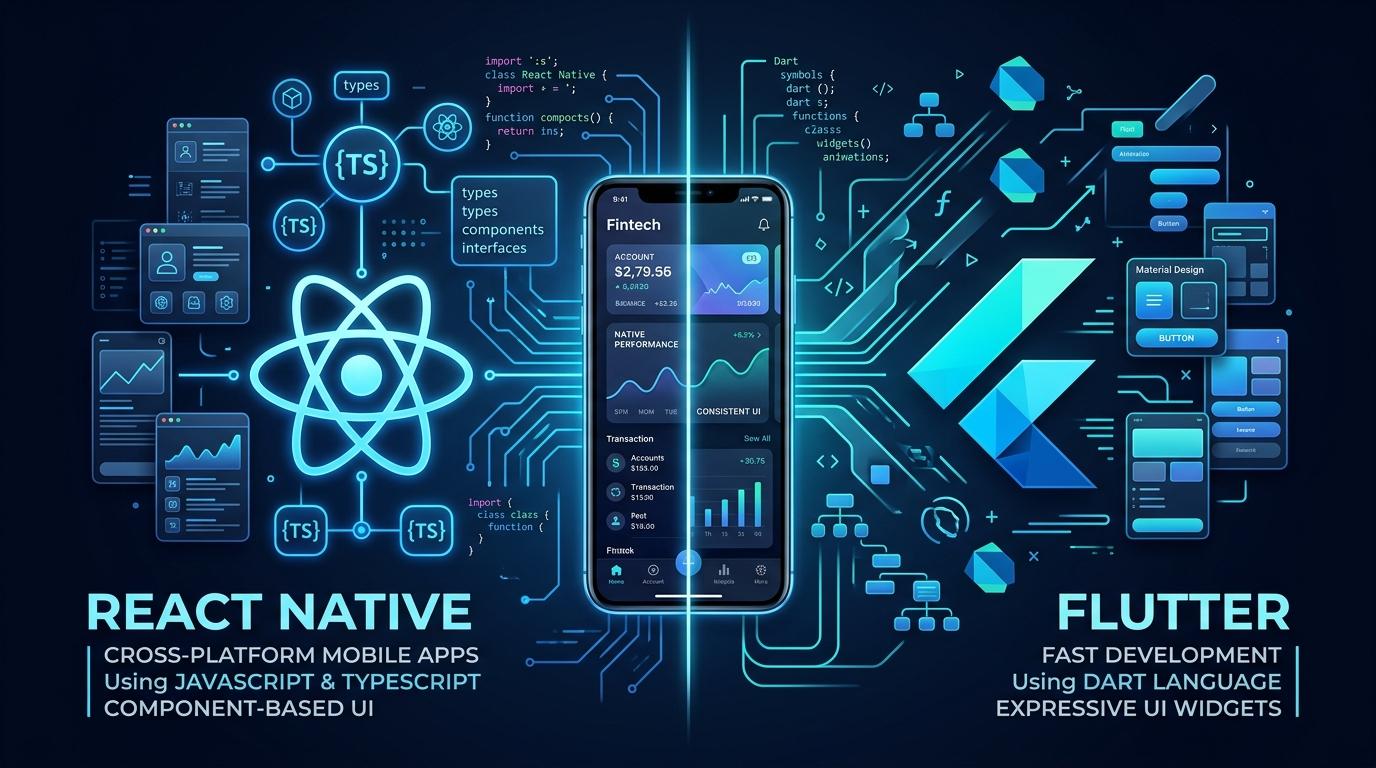
React Native vs Flutter in 2026: An Honest Engineering Guide for Founders
Choosing between React Native and Flutter for your new mobile app? Discover an objective, unbiased comparison of performance, hiring costs, code sharing, and long-term ecosystem viability in 2026.

How to Launch a Mobile MVP Under $2,000: The Lean Founder's Guide
Think launching a mobile app requires $30,000+? Discover our battle-tested blueprint for launching a high-performance iOS and Android Minimum Viable Product (MVP) under $2,000.
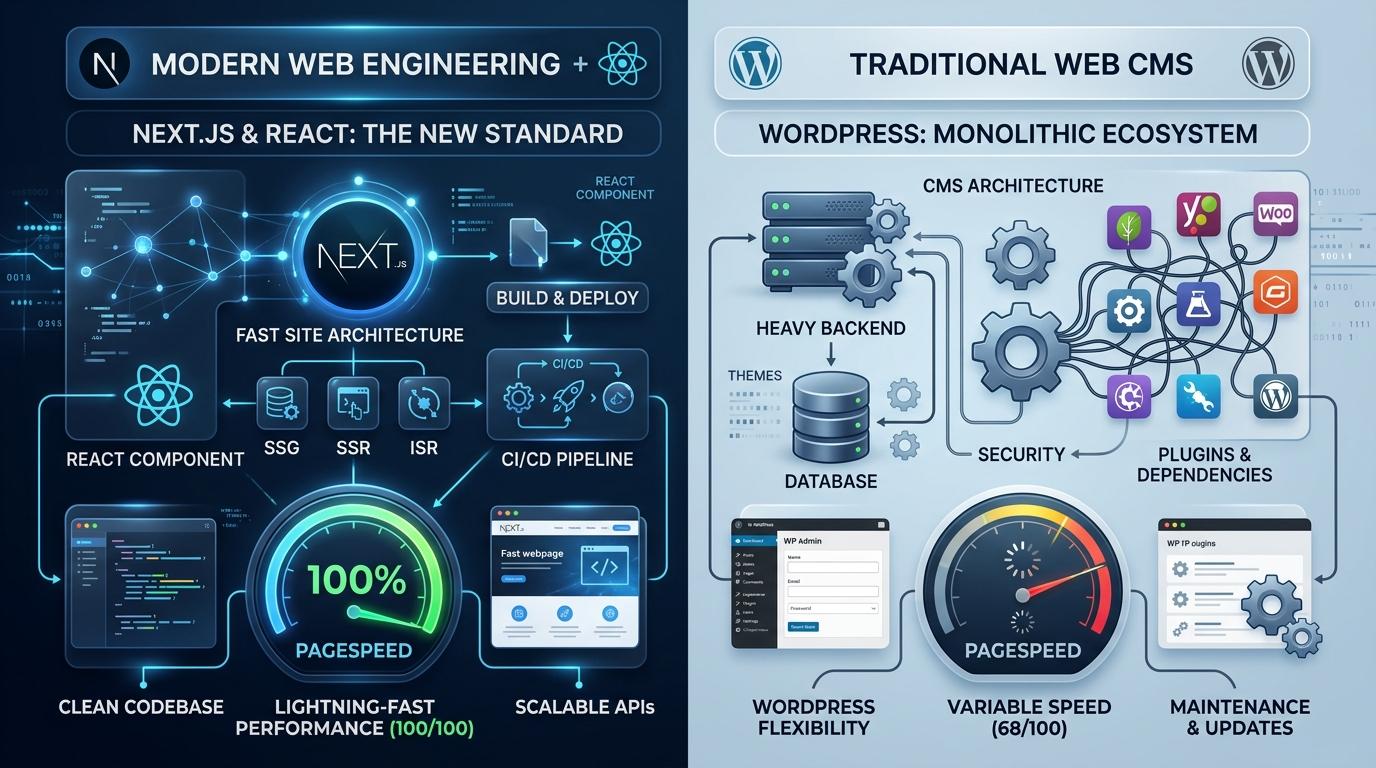
Next.js vs WordPress Cost for SMEs: The Real 3-Year TCO Breakdown (2026)
Thinking of building an SME website? Compare the true 3-year Total Cost of Ownership (TCO) between modern Next.js and traditional WordPress—from initial development to hosting, plugin bloat, security, and conversion impact.
