React Native vs Flutter in 2026: An Honest Engineering Guide for Founders
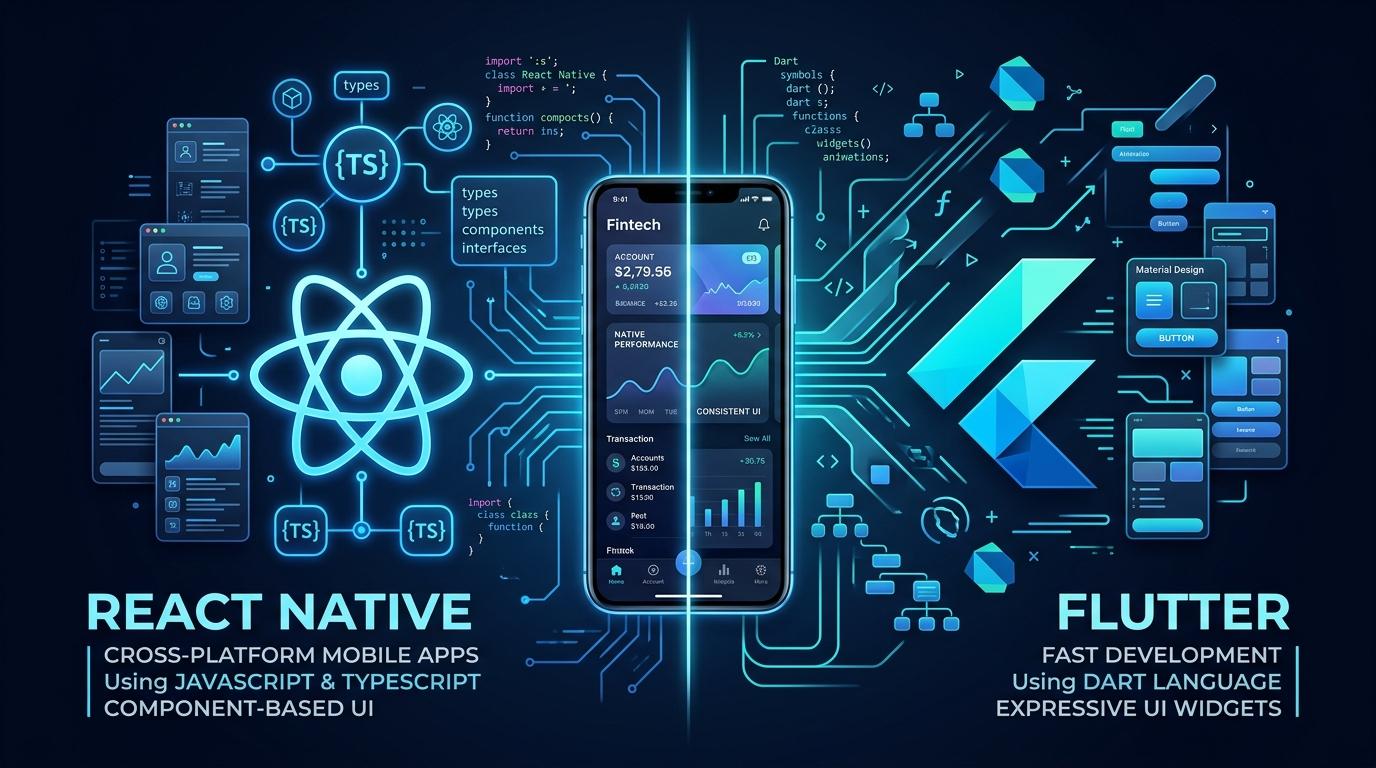
The Cross-Platform Dilemma: Native Performance Without Double the Cost
If you are planning to build a mobile application in 2026, one strategic architecture decision stands above all others: Should you build with React Native or Google Flutter?
Building separate native codebases in Swift for iOS and Kotlin for Android is now largely obsolete for 90% of business applications and early-stage startups. Dual native development immediately doubles your engineering payroll, splits your product team, and causes feature desynchronization between iPhone and Android users.
Both React Native (backed by Meta) and Flutter (backed by Google) offer cross-platform compilation that delivers near-indistinguishable native performance from a single codebase. But which framework should you choose for your specific business requirements? Here is our senior architectural evaluation.
How They Actually Work Under the Hood
- React Native (Meta / Community): Uses JavaScript or TypeScript. With its modern New Architecture (Fabric Renderer + TurboModules + JSI), React Native communicates directly with C++ native threads without the legacy JavaScript bridge. Crucially, React Native renders actual, authentic native UI widgets (UIView on iOS, android.view on Android).
- Flutter (Google): Uses the Dart programming language. Unlike React Native, Flutter bypasses the host operating system's native UI controls entirely. Instead, it utilizes its own high-performance C++ graphics rendering engine (Impeller/Skia) to paint every individual pixel onto a custom 2D canvas, behaving similarly to a high-speed video game engine.
Comprehensive Side-by-Side Comparison
| Architectural Metric | React Native | Google Flutter |
|---|---|---|
| Programming Language | TypeScript / JavaScript (World's #1 most popular ecosystem) | Dart (Clean, strongly-typed, but smaller developer pool) |
| UI Rendering Engine | Native OS Widgets (100% authentic iOS & Android feel) | Custom 2D Canvas via Impeller (Pixel-identical across all devices) |
| Web Code Reusability | Exceptional (Shares 60-80% logic/hooks with Next.js web apps) | Moderate (Flutter for Web has larger bundle sizes & canvas SEO limits) |
| Over-the-Air (OTA) Updates | Native support (Expo EAS / CodePush can deploy instant hotfixes) | Limited (Requires full App Store re-submission for binary changes) |
| Developer Talent Availability | Massive (Easier & cheaper to hire or replace developers) | Moderate (Specialized Dart talent commands premium rates) |
| Initial Binary App Size | ~15MB – 25MB | ~20MB – 35MB (Includes bundled graphics engine) |
When You Should Pick React Native
React Native is the clear industry favorite in these scenarios:
- You Already Have a React or Next.js Web App: Your frontend developers can reuse TypeScript types, API clients, state management, and business logic across both web and mobile, slashing engineering overhead by up to 50%.
- Instant Over-the-Air Bug Fixes (OTA): Using Expo EAS Update, you can push urgent hotfixes directly to users' phones within seconds without waiting 48 hours for Apple or Google review queues.
- You Need True Native OS Look & Feel: If your users expect standard Apple Human Interface Guidelines and material haptics, React Native renders the authentic platform widgets.
- Long-Term Hiring Certainty: With over 15 million JavaScript and TypeScript engineers globally, you will never face developer lock-in.
When You Should Pick Flutter
Flutter shines brightest in these specific use cases:
- Bespoke 2D Canvas UI or Custom Micro-Interactions: If your brand design is so unique that native iOS or Android widgets would get in the way, Flutter lets designers build identical custom visual components.
- Uniformity Across Fragmented Hardware: Flutter guarantees your app looks 100% identical on a $1,400 iPhone 16 Pro and a $90 Android budget handset.
- High-Performance 2D Games & Simulators: If your app involves continuous canvas manipulation or interactive animated charts, Flutter's Impeller engine excels.
"At WebArk, we build production apps with both frameworks. For 80% of B2B platforms, eCommerce applications, and startup MVPs, React Native with Expo offers the highest speed-to-market and lowest long-term maintenance cost."
How WebArk Delivers Cross-Platform Apps
Whether you need a lean startup MVP or an enterprise logistics application with real-time GPS dispatch (like our Premium Paris Transfer VIP Dispatch Platform), our engineering squad delivers clean architecture, comprehensive test coverage, and 100% full source code ownership.
Explore our transparent Mobile App Development Packages (From $1,499 USD) or read our founder's roadmap: How to Launch a Mobile MVP Under $2,000.

WebArk Engineering Architecture Team
Technical EditorialWritten by senior cloud architects and mobile engineering leads at WebArk. With 10+ years delivering mission-critical applications across the UK, USA, France, Germany, and Norway, our team focuses on high-performance Next.js, React Native, and cost-effective digital engineering.
Recommended Services Related to This Topic
Mobile App Development (iOS & Android)
Turnkey cross-platform React Native & Flutter apps with offline sync and cloud APIs.
European & Nordic Mobile Development
Native-feel applications with Vipps, multi-currency, and GDPR privacy compliance.
Transparent App Pricing Packages
Fixed-price mobile app development starting from $1,499 USD with 100% source code ownership.
Related Guides & Insights
Deepen your technical knowledge with expert engineering articles.

How Non-Technical Founders Can Build Software Without Getting Trapped: 5 Rules for IP, Code & Delivery
A practical guide for non-technical startup founders and business owners. Learn how to hire developers, protect your source code, avoid vendor lock-in, and guarantee delivery without getting taken advantage of.

How to Launch a Mobile MVP Under $2,000: The Lean Founder's Guide
Think launching a mobile app requires $30,000+? Discover our battle-tested blueprint for launching a high-performance iOS and Android Minimum Viable Product (MVP) under $2,000.
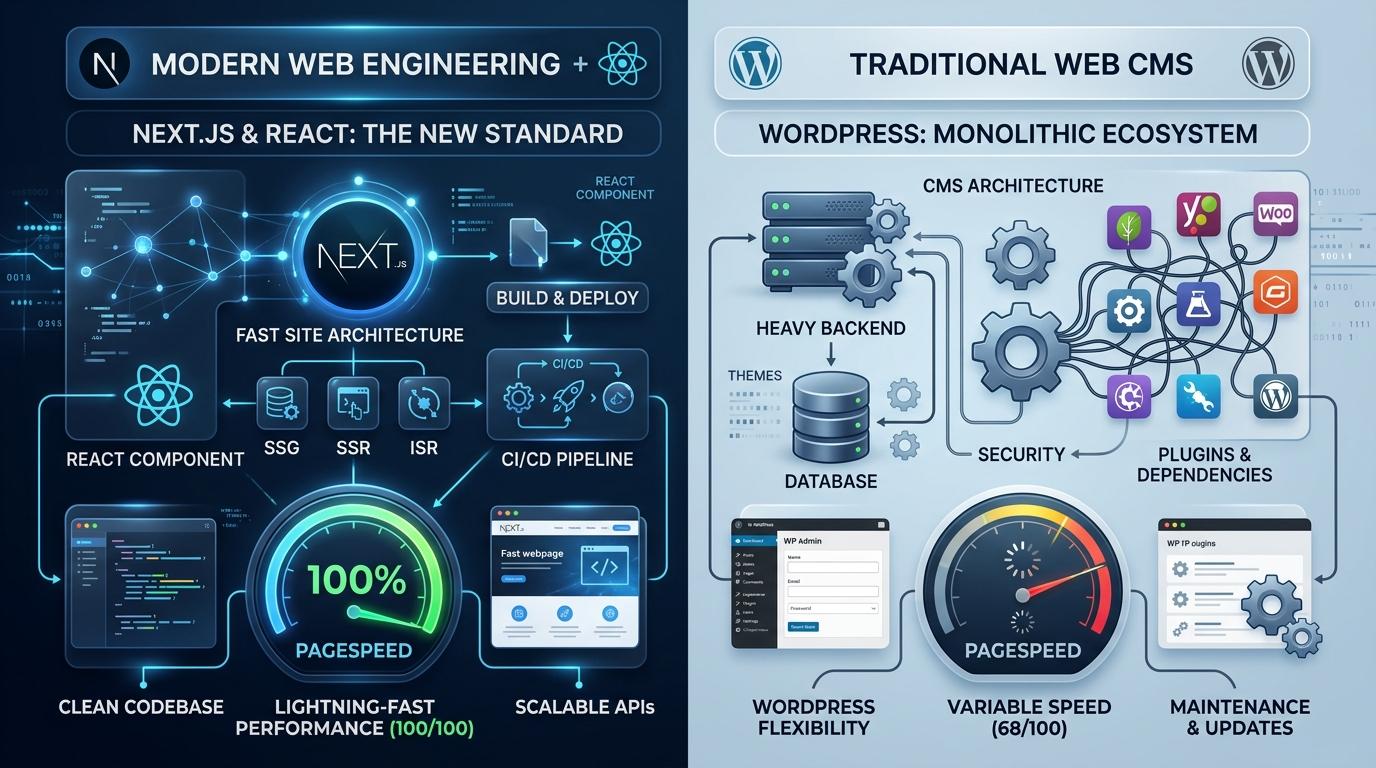
Next.js vs WordPress Cost for SMEs: The Real 3-Year TCO Breakdown (2026)
Thinking of building an SME website? Compare the true 3-year Total Cost of Ownership (TCO) between modern Next.js and traditional WordPress—from initial development to hosting, plugin bloat, security, and conversion impact.
